
Leaded stained glass windows need careful cleaning from time to time, especially when the lead has gone dull, blotchy or powdery. But before scrubbing away at old leaded lights, it helps to understand why the lead ages the way it does, then we’ll look at what safety measures you should take and how you can brighten those windows up.
Product links here will take you to something I actually own, use and trust — not stuff sent to me free or paid to plug. As an Amazon Associate I earn from qualifying purchases so if you buy anything on Amazon (or another site) after clicking through and I earn a small commission at no extra cost to you — you pay the same price, they just share a slice of what they’d have made.
Cleaning old leaded lights without damaging the glass
Let’s have a look at what’s happened to your leaded lights over the last century and what you can do to clean them up and bring the glass back to life — using a few things you’ll find in the kitchen or online for a few quid.
Oxidation of leaded windows
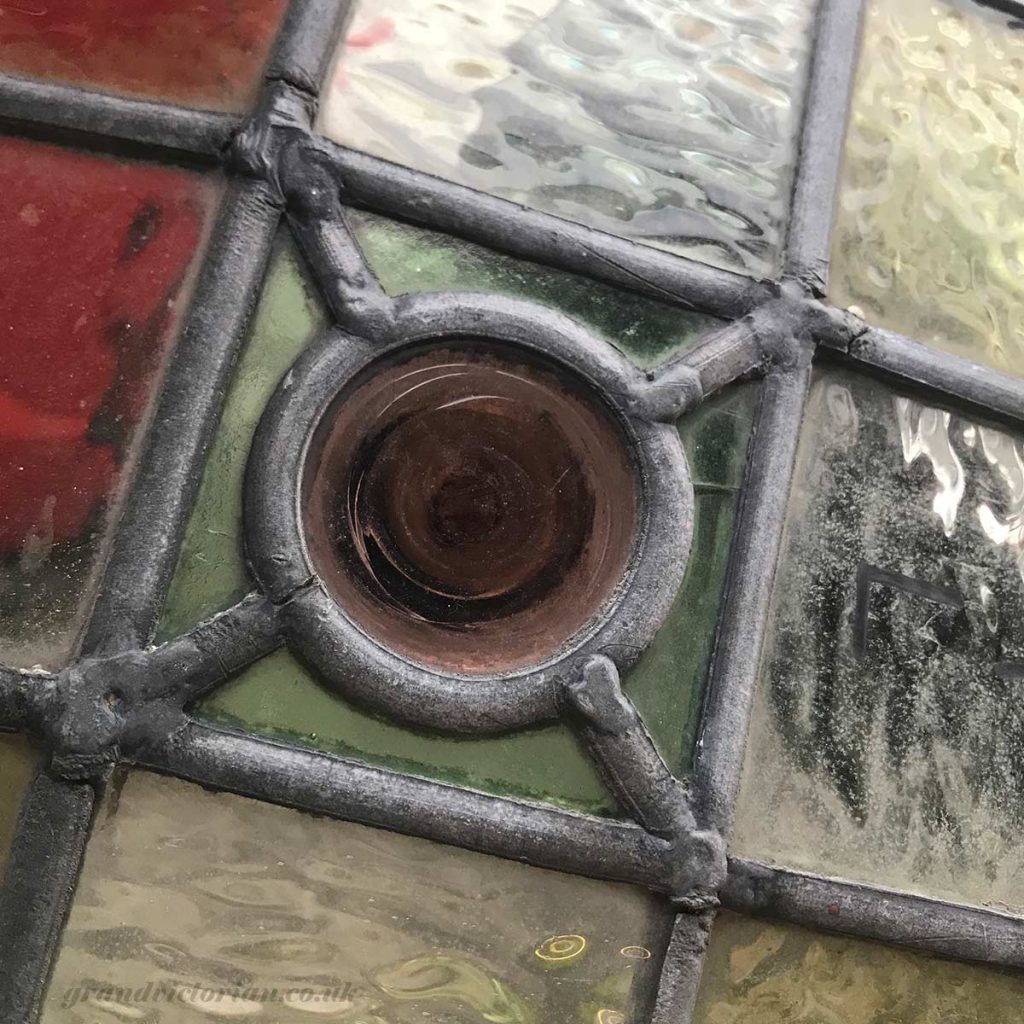
First, it helps to understand why lead goes blotchy and eventually develops a dark grey matt patina.
Remembering that the lead in original windows on a Victorian house is at least 120 years old, we might have a little empathy with them. Everything ages and lead is no exception. What’s actually going on is oxidation — the surface of the lead interacts with oxygen and water in the air.
Because of a molecular imbalance, lead takes on elements in the atmosphere and slowly changes over time.
The science of lead oxidation
The change of state only happens on the surface of the lead. First, the lead on the surface turns into lead oxide — the surface goes matt grey.
Water in the atmosphere will spot the lead and may produce a white powder: basic lead carbonate. This can run down onto the glass but wipes off without staining.
Basic lead carbonate turns to normal lead sulphite, then normal lead sulphate. This is when you reach the grey patina state familiar on old churches and Victorian terrace houses — where the glass is of some age.
Lead patina

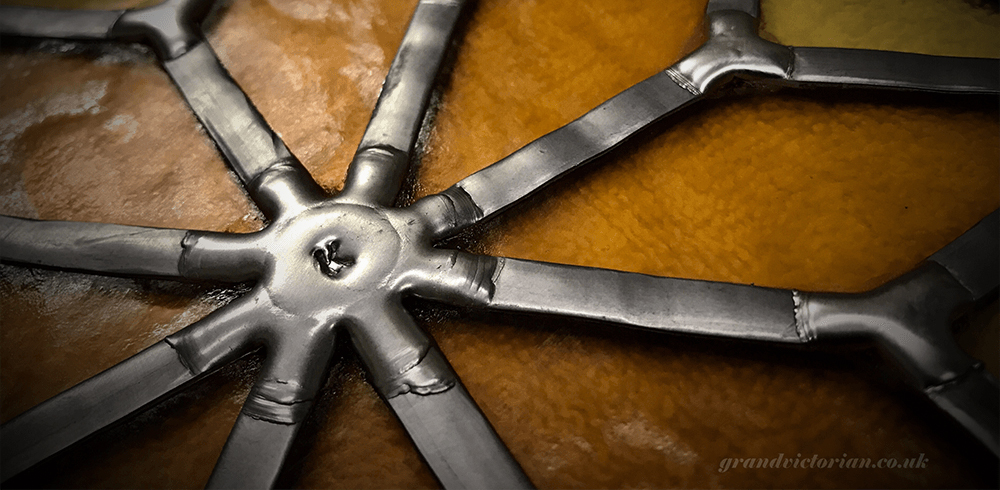
This image shows new lead, all I’ve done is clean it. The customer wanted it to match chrome door furniture and will then leave it to age naturally.
As it ages, the patina on the lead actually protects the lead underneath. A lead unit made up 150 years ago looks much the same as the lead on an 85-year-old 1930s leaded light — because the state of the lead hasn’t changed for decades. The main body of the lead is protected and will be largely unaffected going forward.
So, the grey matt oxidised patina is normal, inevitable and actually protective.
Don’t fight it — let it happen and enjoy its authentic qualities.
Other than your efforts being in vein, in the long-term, rubbing lead with an abrasive will raise lead dust. Breathe that in and you could get lead poisoning.
Speeding up the process of ageing lead
When I make bespoke leaded glass for front doors, I solder the joints, clean it all up, then treat it with a solution that darkens the lead (and soldered joints), it loses that bright new silver look. The result looks more natural in a period door.
This can only be used on new lead so no point for old stained glass units.
Stripping paint from glass & lead
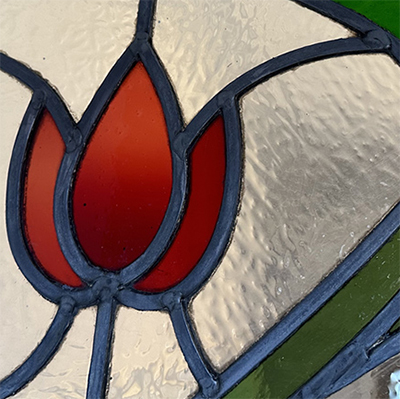
For years I’ve used a water-based paint remover to strip paint from glass and lead caming. Because it’s water-based, it’s non-toxic and has no fumes, so you can use it indoors without ventilation — unlike Nitromors.
Brush a little onto the paint on the glass or lead and work it in with an old toothbrush. It’s especially good for textured glass and around soldered joints. The paint will be soft and ready to wipe off within an hour — use a white scourer (non-scratch).
Be careful not to let the stripper drip down onto the door, especially if you’re cleaning the glass while it’s still fitted. Protect the paintwork below with newspaper and masking tape before you start.
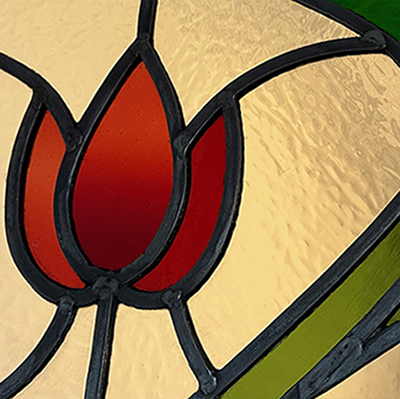
Don’t use an abrasive like wire wool or sandpaper — you may scratch old hand-made stained glass, which is soft and irreplaceable.
On flat glass you can use a sharp Stanley knife blade to remove paint (safer using a window scraper). On textured glass, use the point of the blade carefully.
Your paint stripping kit
Cleaning leaded glass windows
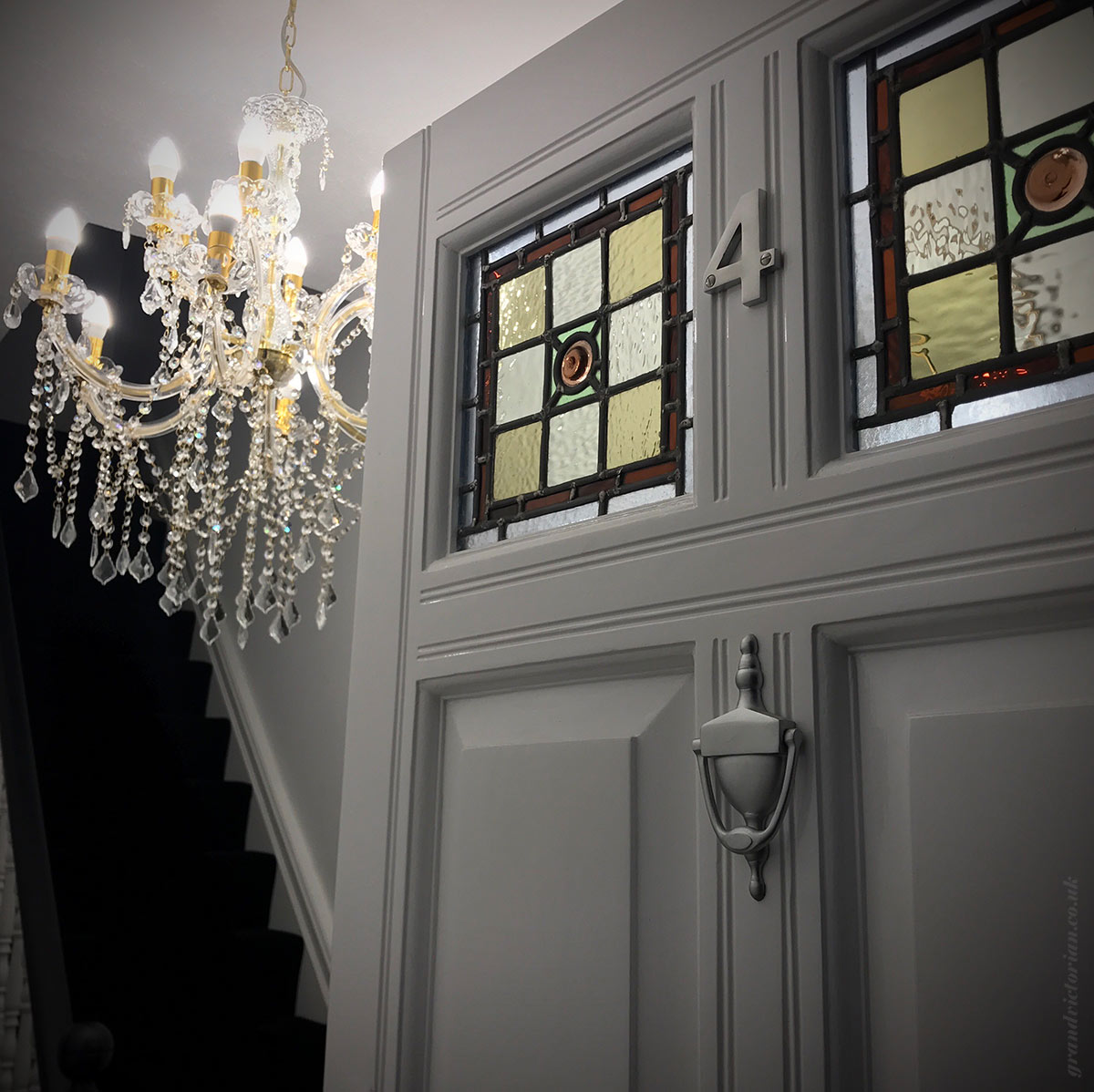
Now you know that taking the patina off the lead will only expose fresh lead that will re-oxidise — so don’t over-clean. The aim is to remove dirt and paint, not to strip the character back to bare metal.
Leaded lights, including the glass, should now be cleaned carefully with warm soapy water and dried with a paper towel, lint-free cloth or microfibre cloth. Don’t use an abrasive material like wire wool — you may scratch or dull old hand-made stained glass.
Darkening the lead and cement
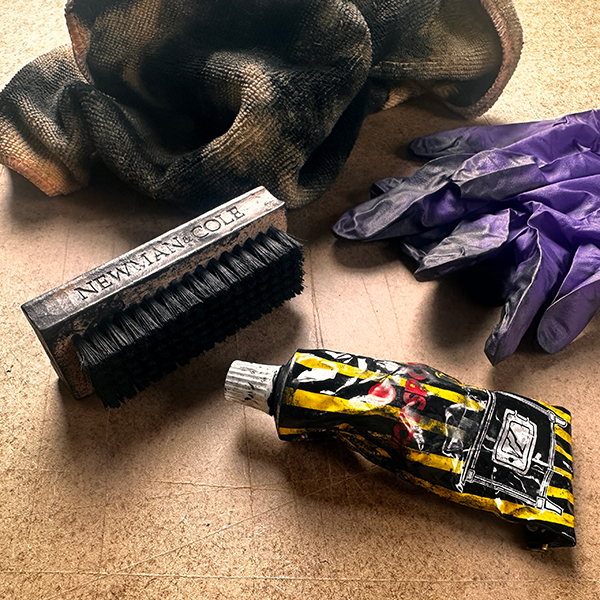
When all of the dirt has been cleaned from the lead and the glass is clean, rub some Black Grate Polish into the lead and the cement around it, it’s amazing what difference it makes.
A nail brush works really well — it gets the polish down the sides of the lead into the cement that seals each piece of glass and evens the colour out. After a few seconds of scrubbing you’ll find there’s little left on the glass.
Buff the whole window down with a paper towel or microfibre cloth.
It takes a bit of time, but it’s well worth the effort. If you have six windows to clean, don’t expect to do them all in an hour. Do the most prominent one first — both sides — and put at least an hour aside. Do it properly and it’ll look lovely; you’ll then know how long the rest will take.
Know that there will be black dust falling from the lead as the polish dries so accommodate for this by masking the beading at the bottom and laying a dust sheet on the floor.
I use a plastic container with a lid to keep my kit in and keep a pair of the gloves in there so they’re the first thing I put on, you’ll start to look like Al Jolson if you don’t.
Your lead-darkening kit
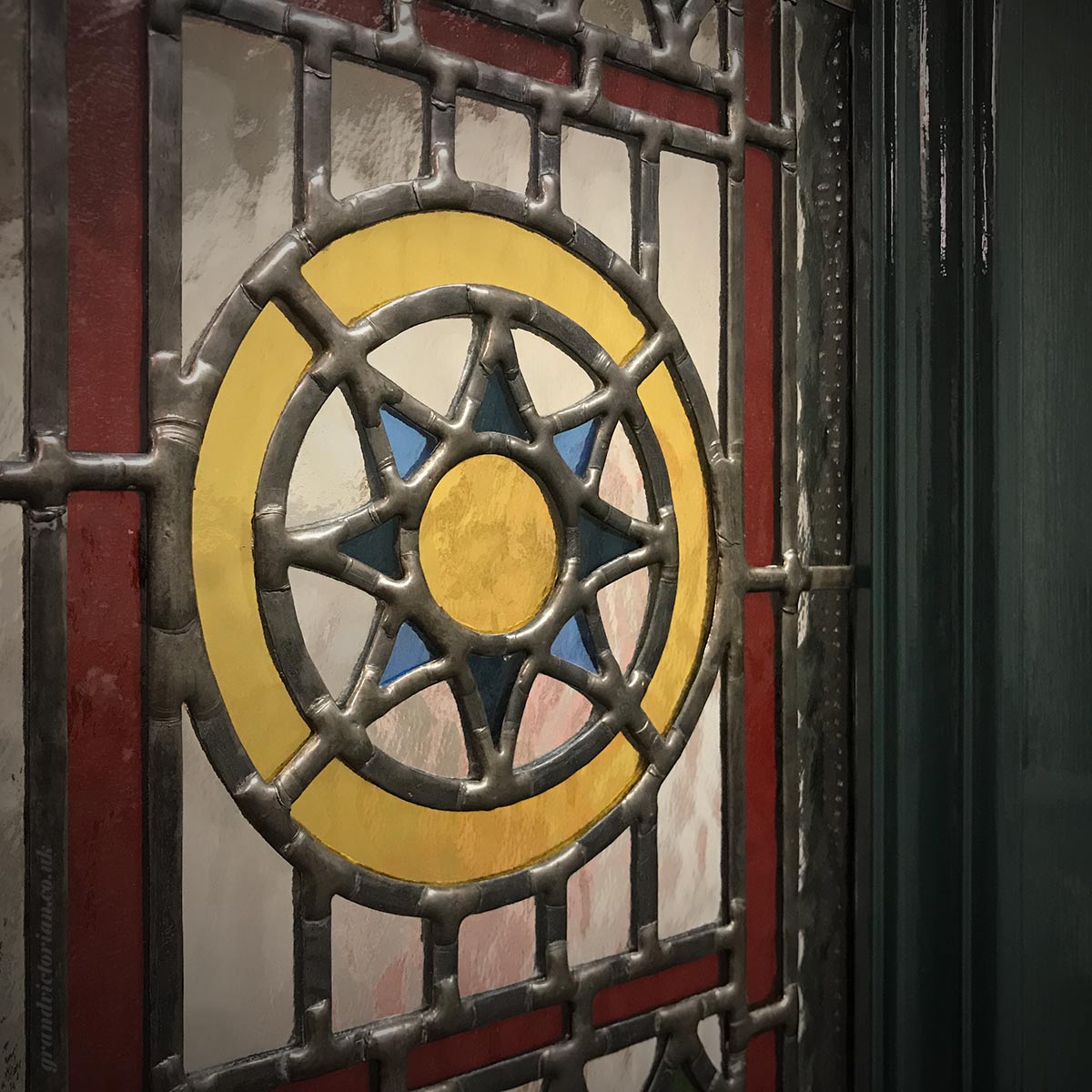
So there you have it, everything you need (plus a few hours) to clean your Georgian, Victorian or 1930’s stained glass windows to a professional standard. It’s a messy job but if you take your time and commit to putting in the effort, you’ll probably only need to do it once.
Lots of people read this guide. If it helped, let me know in the comments how you got on. If you have any questions, don’t hesitate to get in touch or comment below. If you would like to know how I make my leaded glass, in a way that enables me to use toughened safety glass and have the double glazed unit as small as 14mm, take a look at the ‘Read Next’ block below.
How I Make Leaded Glass
If your leaded lights are beyond cleaning — or missing altogether — this is how I make new panels from scratch, and why I don’t make ‘traditional stained glass’.